
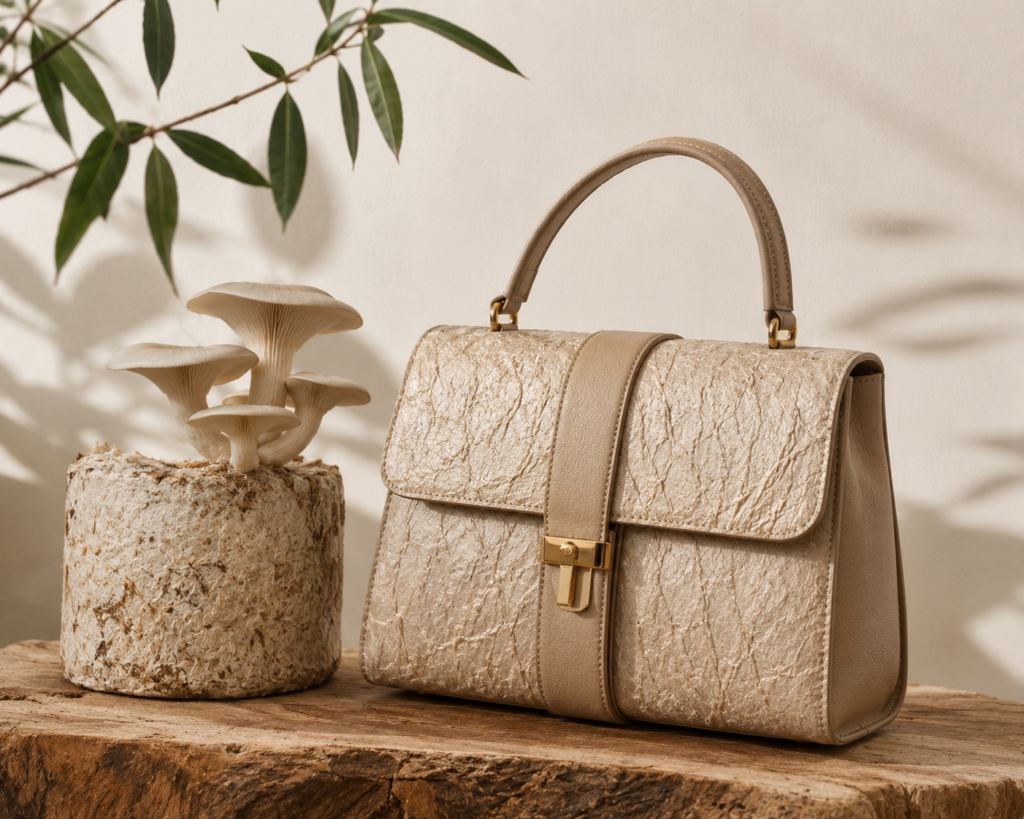
Every genuine leather handbag traces back to a slaughterhouse, and no amount of tanning, embossing, or luxury branding erases that origin — bio leather removes the animal cruelty from the equation entirely, without asking you to sacrifice style.
Table of Contents
The Animal Cruelty Genuine Leather Brands Don’t Advertise
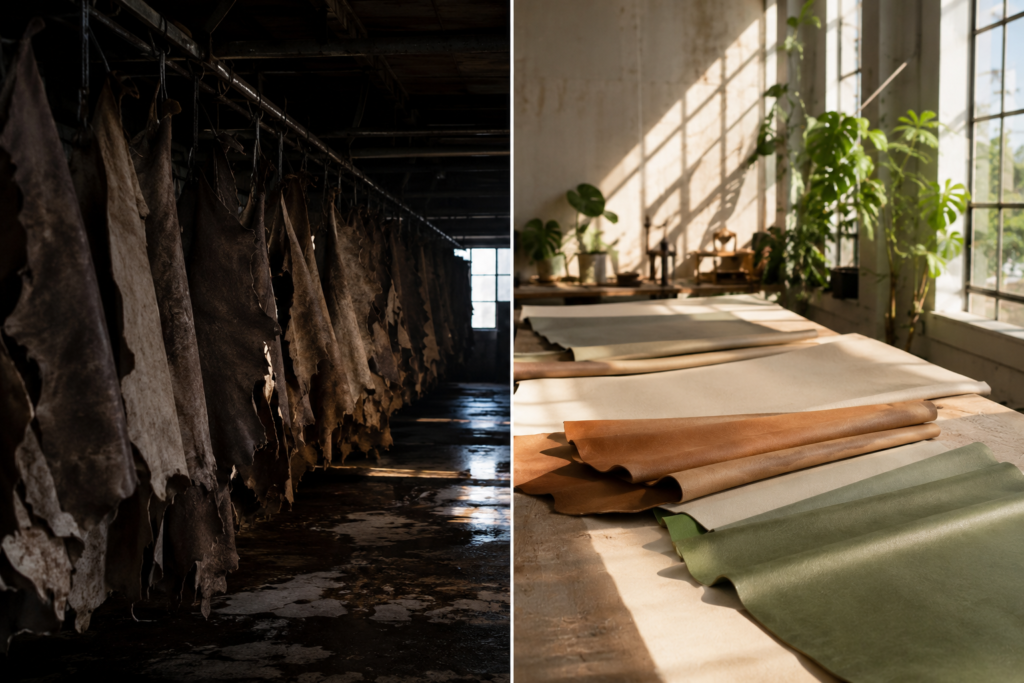
Leather manufacturers rarely mention where the raw material comes from, because the truth doesn’t sell handbags. Cattle raised for leather live in confined feedlots, travel long distances to slaughter, and die specifically so their hide can become a $3,000 tote. This isn’t a byproduct story anymore — global leather demand now drives dedicated hide production, which means the animal cruelty baked into a “classic” leather bag is a direct business decision, not an accident of the meat industry.
Bio leather brands built their entire model around rejecting that decision. Bolt Threads grows Mylo from mycelium — mushroom root structures — in controlled facilities that need no pasture, no feedlot, and no animal at all. Stella McCartney, a brand that has never used animal leather, incorporated Mylo and VEGEA (a grape-based leather made from wine industry waste) into her handbag lines years before “sustainable luxury” became a marketing checkbox. Even Hermès, a house synonymous with exotic skins, experimented with a Mylo version of the Birkin — a quiet admission that animal cruelty is no longer a technical requirement for a prestige handbag.
Compare that to how conventional tanneries operate. A single hide passes through chrome tanning baths, heavy water use, and chemical finishing steps before it ever reaches a cutting table, and every one of those steps exists downstream of an animal’s death. Bio leather producers skip the death entirely and still land on a finished material that a designer can cut, stitch, and emboss the same way. That’s the part animal lovers should sit with: the industry didn’t need decades to find an alternative. It needed brands willing to build the supply chain and prove the material could perform.
Real Brands Already Winning Without Animal Cruelty
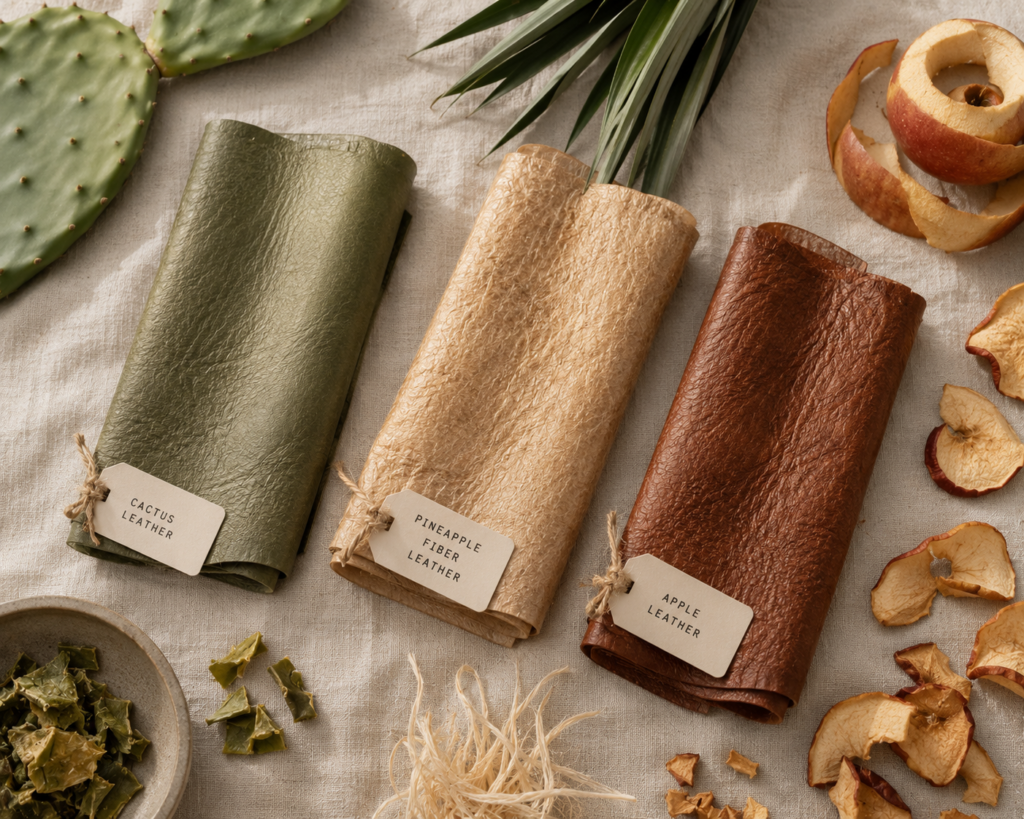
Skeptical buyers want proof, not promises, so look at who’s already shipping bio leather at scale. Mexican innovators Adrián López Velarde and Marte Cázarez built Desserto from Nopal cactus, a crop that grows in the Sonoran Desert without irrigation or pesticides — their material now appears in handbags and accessories sold across multiple continents.
Dr. Carmen Hijosa founded Ananas Anam and turned discarded pineapple leaf fibers from Philippine farms into Piñatex, a material durable enough that suppliers rate it for roughly 15,000 flex cycles before visible wear — a number that rivals mid-to-high-grade animal leather. Italian company Frumat converts apple juice production waste into apple leather, and several Italian accessory brands now build handbags on that material instead of hides tied to animal cruelty.
Bottega Veneta took a different route, weaving its signature Intrecciato pattern from recycled textile fiber instead of lambskin for select pieces — proof that heritage craftsmanship and animal cruelty don’t have to travel together. None of these brands positioned bio leather as a compromise. They positioned it as the better material story, and buyers under 40 increasingly agree: status now attaches to the bag that avoided animal cruelty, not the one that required it.
The ROI Animal Lovers Actually Care About

You don’t buy a handbag on ethics alone — you want it to last, hold value, and not fall apart in eighteen months, so here’s the math that matters. Cactus leather resists UV damage and stays flexible across climates, which means it survives daily use the way conventional leather does, minus the animal cruelty in its supply chain. Bio-crafted totes currently cost 15% to 25% more than a comparable bovine bag, a premium buyers now treat as an “ethical dividend” rather than a markup, because the resale and desirability curve on bio leather bags is climbing faster than on traditional skins among younger luxury buyers.
Speed matters too. A cactus or apple leather supply chain skips the years-long cattle-raising cycle entirely — Nopal cactus reaches harvestable maturity in about eight months, and mycelium grows into usable sheets in a matter of days inside a lab. That shorter production cycle lets bio leather brands respond to demand faster than any tannery tied to a livestock timeline, and it removes animal cruelty from every single step of that faster process. For a buyer who wants both a fast-moving, on-trend accessory and a clean conscience, bio leather delivers both without forcing a trade-off.
Investment value follows the same trend line. High-net-worth collectors under 40 increasingly favor brands that own their material technology outright — the Hermès and MycoWorks partnership is the clearest example — over brands licensing a generic “eco” fabric from a third party. Owning the growth technology signals a long-term commitment, and buyers reward that signal with resale demand. If you’re weighing a bio leather bag against a traditional one purely on financial terms, the gap in upfront price is shrinking every year, while the reputational upside of skipping animal cruelty keeps climbing.
How to Spot Real Cruelty-Free Leather (and Avoid Greenwashing)
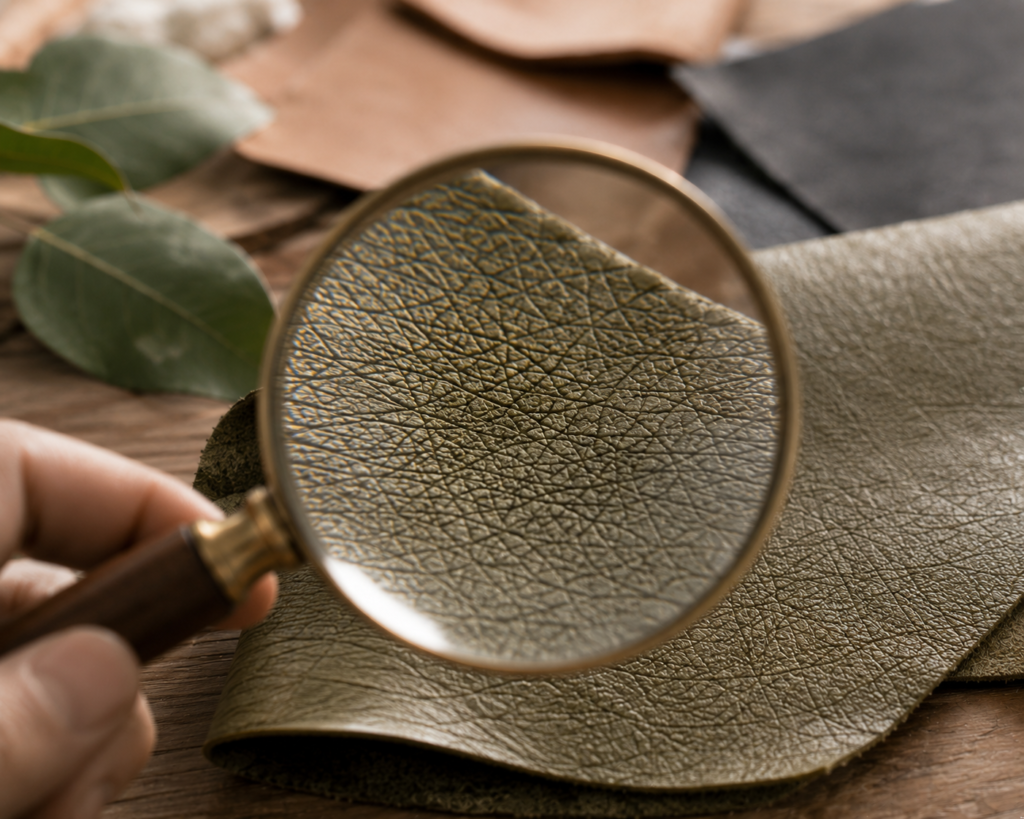
Not every bag labeled “vegan” earns the animal-cruelty-free claim it makes, so check three things before you buy. First, demand the bio-based percentage. No plant-based leather is 100% plant material yet — a small binder keeps it durable — but a brand that discloses “72% plant-based” instead of a vague “eco-friendly” label is one you can trust. Second, check the base material. Conventional PU and PVC “vegan leather” avoids animal cruelty but still relies on fossil fuels and never biodegrades, so it solves one problem while creating another; genuinely bio-based options like Piñatex, Desserto, and Mylo solve both.
Third, trace the manufacturing location. A cactus leather bag made in a factory with poor labor standards still fails the ethics test, even with zero animal cruelty in its material sourcing — brands producing in Portugal, Italy, or Spain generally pair strong labor protections with shorter supply chains.
Ask the brand these three questions directly, and you’ll separate genuine bio leather innovation from a marketing team that slapped “cruelty-free” on a plastic bag. The animal lovers who get burned by greenwashing usually skipped this step, not because bio leather failed them, but because they never verified what “bio” actually meant.
Bio leather already proves that animal cruelty was never a requirement for beautiful, durable handbags — only a shortcut the industry got comfortable taking. Choose the material that grows in a lab or a desert instead of the one that requires a slaughterhouse, and your next handbag purchase becomes proof, not just a promise.
Written By Meeanu.Com
