
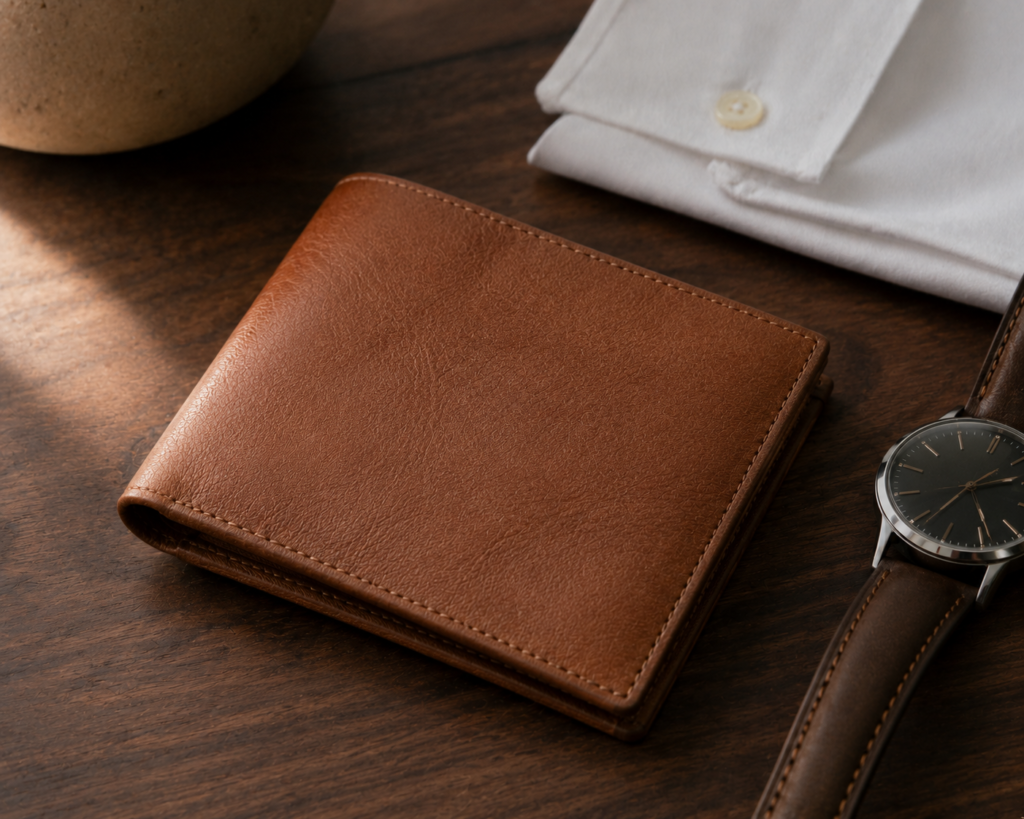
Bio Leather Wallets for Men: The Proven Upgrade Your Pocket Will Ever Need
A bio leather wallet made from mushroom fiber or cactus leaves can outlast, outshine, and outperform the cowhide bifold sitting in your drawer right now. What Bio Leather Actually Is (And Why It Matters to You) Bio leather comes from renewable sources — mycelium (mushroom root structure), cactus leaves, apple peels, or grape skins left over from winemaking. Manufacturers grow or harvest these materials, then treat them with plant-based polymers to create a durable, flexible surface that looks and feels like traditional leather. Brands like Mylo (mycelium leather, used by Adidas and Stella McCartney), Desserto (cactus leather from Mexico), and Piñatex (pineapple leaf fiber) have moved past prototype stage. They supply material to luxury houses that test everything before committing their name to it. If Hermès and Stella McCartney trust these materials for handbags, a wallet — smaller, lower-stress-use — is an easy win. For you, the buyer, this matters because bio leather solves the two complaints men actually have about traditional leather wallets: the break-in period and the maintenance schedule. Bio leather arrives soft. No six-month conditioning ritual. No cracking if you forget to oil it. The ROI Math Nobody Explains A full-grain leather wallet from a mid-tier brand runs $80–$150 and needs conditioning every 3–4 months to avoid drying out. Skip that step twice, and you’re looking at cracked corners within 18 months. Replacement cost: another $80–$150. A quality bio leather wallet sits in the same $70–$140 price bracket at launch (Desserto and Pinatex-based wallets from brands like Nuuwaï and Bohème Habitat). The difference: bio leather doesn’t dry out the same way, because it doesn’t rely on animal fat retention. You wipe it down, and it holds its shape. Run the five-year math. Traditional leather, replaced once due to wear or neglect: $160–$300 total. Bio leather, same period, zero replacement: $70–$140. That’s a 50–75% reduction in total cost of ownership for a product doing the exact same job — holding your cards and cash. Warranty terms back this up. Nuuwaï offers a 2-year warranty on stitching and material integrity. Compare that to most mass-market leather wallets, which offer 90 days to a year. Real Brands, Real Buyers, Real Numbers Stella McCartney sold Mylo-based accessories at full luxury pricing in 2021, proving mycelium leather survives retail-grade quality control. Ambient (a Berlin-based accessory brand) ships cactus-leather cardholders and wallets with a stated 3-year abrasion-resistance guarantee based on internal testing against ISO leather durability standards. Fossil released a limited cactus-leather wallet line in 2022, selling out within weeks according to their own product page data. That’s not a niche crowdfunding stunt — that’s a publicly traded company with 90 years of leather goods history betting shelf space on the material. Men who buy these wallets aren’t hobbyists chasing a trend. Buyers on Reddit’s r/goodyearwelt and r/leathercraft forums — communities historically skeptical of anything not full-grain — have posted year-plus wear reports on cactus leather cardholders showing minimal creasing and no flaking, categories where cheap bonded leather typically fails within months. The Durability Question, Answered With Data The biggest objection: does bio leather actually hold up, or is it a marketing story? Desserto’s own lab testing (Mexican textile standard NMX-A-099) shows their cactus material passes 50,000+ Martindale abrasion cycles, a benchmark used for upholstery-grade textiles. Standard bonded leather (the material inside most “genuine leather” wallets under $50) typically fails between 10,000–15,000 cycles. Mycelium leather from Mylo has undergone testing by Bolt Threads showing tensile strength comparable to mid-grade bovine leather, sufficient for daily-carry accessories that don’t bear heavy structural load like a wallet. The failure point for most wallets isn’t the material — it’s the stitching and the wallet’s construction quality, same as traditional leather. Buy from a brand that reinforces stress points (card slots, center fold), and the base material outperforms low-to-mid-grade animal leather on abrasion resistance while matching it on flexibility. Bio leather wallets for men aren’t a compromise disguised as ethics — they’re a material upgrade that happens to also skip the slaughterhouse. Buy one from a brand that publishes its abrasion data, and the wallet in your pocket will outlast the guilt-free story you tell about it. Written By- Meeanu.Com Other Resources
Bio Leather Wallets for Men: The Proven Upgrade Your Pocket Will Ever Need Read More »
